
Unlocking the Conversation: Your Essential Guide to Key Mental Health Awareness Terms
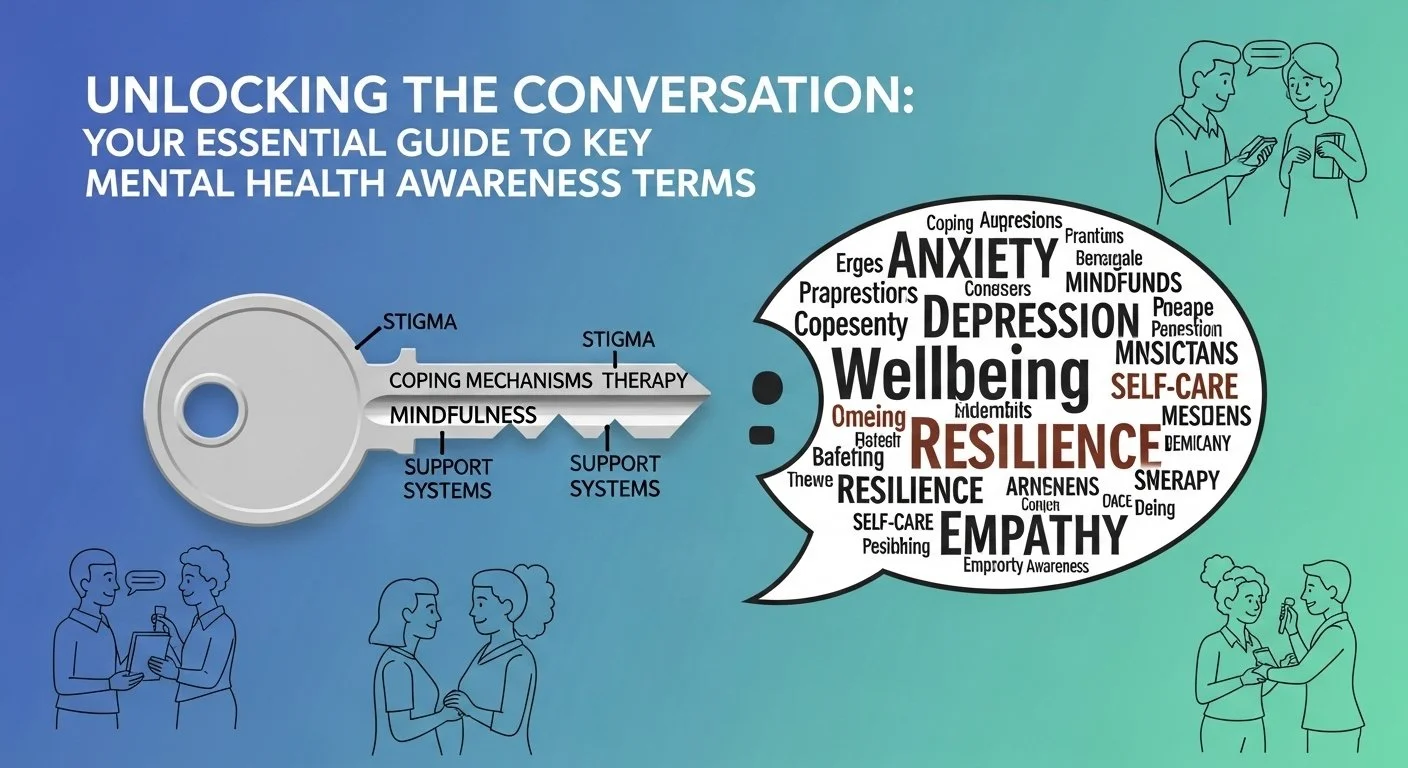
Have you ever felt lost in a conversation about mental health? Maybe you’ve heard words like "triggered," "trauma," or "resilience" thrown around and wondered what they really mean. You're not alone. The world of mental health can feel like it has its own language, and not knowing it can make you feel like an outsider—especially if you or someone you love is struggling.
This guide is here to change that. Think of it as your friendly, pocket-sized translator. We’ll break down complex terms into simple, clear definitions, giving you the confidence to understand, communicate, and advocate for yourself and others. Because when we share a common language, we can break down stigma and build a more supportive world.
Let's start with some essential ideas that form the foundation of mental well-being.
Foundational Concepts: The Building Blocks of Well-Being
These terms describe the core of our mental and emotional health.
What is Mental Health?
It’s more than just the absence of a mental illness. Mental health includes our emotional, psychological, and social well-being. It affects how we think, feel, and act. It also helps determine how we handle stress, relate to others, and make choices. Good mental health is a vital resource for living a fulfilling life.
What is Mental Illness?
Mental illness refers to a wide range of conditions that affect mood, thinking, and behavior. Examples include depression, anxiety disorders, and bipolar disorder. It’s important to remember that these are medical conditions, not character flaws. They can affect anyone, and they are often treatable.
The Difference: Mental Health vs. Mental Illness
Think of it like physical health. You can have a cold (a temporary illness) but still be a generally healthy person. Similarly, you can have a mental illness but also have periods of strong mental health. Conversely, you can be free from a diagnosed mental illness but still struggle with poor mental health during a stressful time, like after a major loss.
Resilience: Your Inner Strength
Definition: Resilience is the process of adapting well in the face of adversity, trauma, tragedy, threats, or significant sources of stress. It's not about "toughing it out" or avoiding pain. It’s the ability to "bounce back" and even grow from difficult experiences.
Real-Life Example: Imagine a tree bending in a strong storm. It doesn't remain stiff; it sways and flexes so it doesn't break. After the storm passes, it returns to its upright position. Resilience is that flexibility and ability to recover.
Did You Know? Research from the American Psychological Association shows that resilience is common and can be learned and developed by anyone. It often involves behaviors, thoughts, and actions that can be cultivated over time.
Stigma: The Barrier to Healing
Definition: Stigma is a set of negative and often unfair beliefs that a society or group has about something. In mental health, it’s when people are viewed or treated negatively because of their condition. This can lead to shame, secrecy, and isolation, preventing people from seeking the help they need.
A Helpful Statistic: According to the Centre for Addiction and Mental Health (CAMH), while 1 in 5 Canadians will experience a mental health problem in any given year, many delay or avoid treatment due to the fear of stigma.
How to Fight Stigma: You can help by:
Learning the facts and sharing accurate information (just like you're doing now!).
Speaking up when you hear hurtful language.
Treating people with mental health problems with respect and compassion, just as you would anyone else.
Grief: More Than Just Sadness
Definition: Grief is a natural, intense emotional response to loss. While we often associate it with the death of a loved one, people can grieve many things: the end of a relationship, a job loss, a decline in physical health, or the life they imagined before a major life change.
Author and grief counselor Grace Tallman explores this broader idea of grief beautifully in her book, Stronger: Stories of Grief and Resilience. As one psychiatrist noted about her work, it highlights "non-death griefs" as "major psychological pain points, often overlooked." This is a powerful reminder that grief is a universal human experience, and all forms of it deserve acknowledgment and care.
Trauma: The Lasting Impact
Definition: Trauma is the emotional and psychological response to a deeply distressing or disturbing event. It overwhelms an individual's ability to cope. Trauma can result from a single event, like an accident, or from repeated exposure to stress, such as abuse or neglect. Its effects can be long-lasting and show up in many ways, including anxiety, flashbacks, and difficulty trusting others.
Exploring Common Mental Health Conditions
Here are definitions for some of the most frequently discussed conditions.
Anxiety Disorders
This isn't just everyday worry. Anxiety disorders involve more than temporary fear or worry. For a person with an anxiety disorder, the anxiety does not go away and can get worse over time, interfering with daily activities.
Generalized Anxiety Disorder (GAD): Chronic, exaggerated worry about everyday life.
Panic Disorder: Unexpected and repeated episodes of intense fear, known as panic attacks.
Social Anxiety Disorder: Overwhelming worry and self-consciousness about everyday social situations.
Depression (Major Depressive Disorder)
More than just feeling sad for a few days. Depression is a persistent feeling of sadness and loss of interest that lasts for at least two weeks. It interferes with daily life and can cause physical symptoms like changes in sleep, appetite, and energy levels.
Grace Tallman's memoir, The Birds Still Sing, offers a real-life account of navigating this darkness. It's described as a "bold, real-life account of a young mother who plunges into the depths of darkness and emerges as a stronger, more grounded person." Stories like hers remind us that recovery is a journey, and hope is possible.
Bipolar Disorder
A condition associated with episodes of mood swings ranging from depressive lows to manic highs. In the manic phase, a person may feel euphoric, full of energy, or unusually irritable. These episodes can affect sleep, energy, activity, judgment, and behavior.
Post-Traumatic Stress Disorder (PTSD)
A disorder that develops in some people who have experienced a shocking, scary, or dangerous event. Symptoms may include flashbacks, nightmares, severe anxiety, and uncontrollable thoughts about the event.
Obsessive-Compulsive Disorder (OCD)
A disorder characterized by unreasonable thoughts and fears (obsessions) that lead you to do repetitive behaviors (compulsions). For example, a fear of germs (obsession) might lead to excessive hand-washing (compulsion).
Words in Practice: Therapy, Coping, and Support
Knowing the terms for treatments and strategies can help you find the right path to healing.
Therapy (Psychotherapy)
A general term for treating mental health problems by talking with a psychiatrist, psychologist, or other mental health provider. It's a collaborative process based on the relationship between an individual and a therapist. There are many types, including:
Cognitive Behavioral Therapy (CBT): A practical, goal-oriented therapy that helps you identify and change negative thinking and behavior patterns.
Dialectical Behavior Therapy (DBT): A type of CBT that teaches behavioral skills to help handle stress, manage emotions, and improve relationships.
Coping Mechanisms
The tools and strategies people use to manage stress and difficult emotions. They can be:
Healthy: Exercise, talking to a friend, journaling, deep breathing, engaging in hobbies.
Unhealthy: Substance abuse, self-harm, avoidance, social withdrawal.
Support System
The network of people—family, friends, peers, and professionals—who provide practical or emotional support. A strong support system is a key factor in building resilience and recovering from mental health challenges.
Self-Care
The practice of taking an active role in protecting one's own well-being and happiness, particularly during periods of stress. It’s not selfish; it’s essential. It can mean getting enough sleep, eating nourishing food, setting boundaries, or doing something you enjoy.
Trigger
Something (an event, a place, a smell, a sound) that causes a person to relive a traumatic experience or experience a strong negative emotional reaction. Triggers are highly individual.
Grounding Techniques
Strategies that can help a person manage overwhelming feelings or flashbacks. They work by connecting you to the present moment. A common example is the "5-4-3-2-1" technique: Acknowledge 5 things you see, 4 things you can touch, 3 things you hear, 2 things you can smell, and 1 thing you can taste.
Peer Support
Emotional and practical support between people who share a common experience, such a mental health challenge. It’s based on the idea that people who have "been there" can offer unique understanding and hope.
Putting It All Together: A Quick Reference Glossary
For a super-quick recap, here are the terms we've covered:
Mental Health: Our emotional, psychological, and social well-being.
Mental Illness: Medical conditions affecting mood, thinking, and behavior.
Resilience: The ability to adapt and bounce back from adversity.
Stigma: Negative beliefs and attitudes towards people with mental health conditions.
Grief: A natural response to loss (of many kinds).
Trauma: The lasting emotional response to a distressing event.
Anxiety: Persistent, excessive worry that interferes with daily life.
Depression: A persistent feeling of sadness and loss of interest.
Bipolar Disorder: A condition with extreme mood swings.
PTSD: A disorder triggered by a terrifying event.
OCD: Unreasonable thoughts and fears leading to repetitive behaviors.
Therapy: Talking with a professional to treat mental health problems.
Coping Mechanisms: Strategies used to manage stress.
Support System: Your network of people who help you.
Self-Care: Taking action to protect your own well-being.
Trigger: Something that causes a strong negative emotional reaction.
Grounding Techniques: Strategies to connect you to the present moment.
Peer Support: Support from someone with shared lived experience.
Your Journey to Understanding Starts Now
Learning these terms is a powerful first step. It empowers you to have better conversations, advocate for yourself or a loved one, and replace confusion with clarity. Remember the wisdom from Grace Tallman's work on resilience: moving from pain to purpose is possible. She shares how we can find strength and "live vibrantly" even amidst challenges, encouraging us to "embrace resilience in our own lives."
By educating ourselves, we not only help ourselves but also contribute to a world where mental health is understood, respected, and openly discussed. So, keep learning, keep asking questions, and be kind to yourself and others on the journey.
Call to Action:If you found this guide helpful, please share it with someone who might need it. Breaking the silence starts with a single conversation. For more stories of hope and resilience that bring these terms to life, be sure to explore the work of advocates like Grace Tallman. You can find her powerful books, including The Birds Still Sing and Stronger, here. They serve as beautiful, real-world reminders that even in our most difficult moments, healing and growth are within reach.
A Story of Faith, Strength, and Grace
Follow a powerful journey of resilience and spiritual renewal that reminds readers how faith can guide us through life’s most difficult moments.

My Journey Through the Cross
A powerful story of faith, perseverance, and spiritual transformation that inspires readers to trust God's plan even in life's hardest moments.

